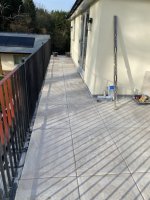
Well, as is tradition, when the nights come early and the frost likes to bite your toes, it's time to do a bit more on the workshop.
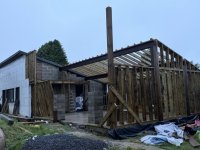
With the concrete base down over the summer the rest of the framing and roof structure needs to be added. Due to the span of nearly 9 metres we need 2 metal beams to be installed. Got a structural engineer, who literally lives round the corner, to visit the site and work out the beam sizes needed to support the roof. These were bigger than I had initially thought, but best to trust in the experts. Although I also asked ChatGPT for its recommendation and it suggested the same, so no issues there. These were ordered and delivered to the house. Now how does one shift 2, 9 metre chunks of metal weighting nearly 300kgs each.
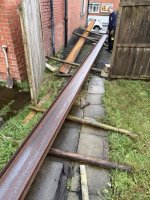
We managed to use a plank to shift the beams onto some round wooden posts and start rolling these like in the Middle Ages. This worked out well, until we hit the hill section and the beam just wanted to roll back down again. Bring in the wench, sorry I mean winch. This was bolted to the concrete floor and the other end attached to the beam. We could use the plank to shift the beam up the hill and have the winch to take up the slack preventing the beam from rolling back.
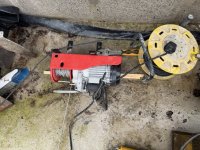
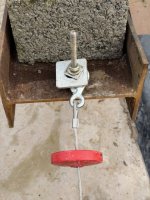
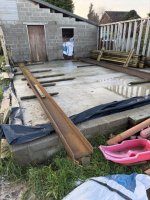
This technique worked really well, and we managed to get both beams shifted up onto the concrete floor in short order.
Next issue was how to get the beams lifted up to their mounting places on the wall and timber supports. The timber supports has a 10mm metal plate added to help spread the weight of the beam on the wood. I had looked up our local hire shops for some inspiration, and found beam lifters. One was all that was needed. Hire out for the weekend and the jobs done, right.
NOPE!
The lifters were all out on hire and wouldn't be back until January at the earliest. I was hoping to get the beams up so I could get the roof rafters installed. So how to get these heavy lumps of steel lifted 3 and 4 metres into the air. Think, there must be another way.
Getting the shopping from Tescos and packing the car, I just happen to notice the scissor jack for lifting the car when changing the wheel. Hmmm, would this be able to lift the beam. Short story, even shorter, yes.
Working on one side I'd lift the beam up, slot a concrete block into place and lower the beam back done onto the block, then do the same on the other end, and back again, each time lifting the beam 6 inches at a time.
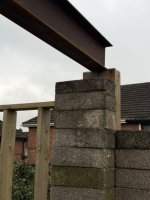
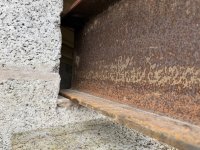
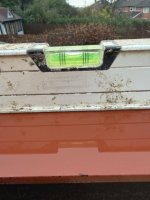
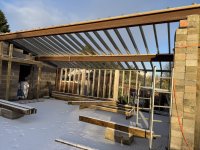
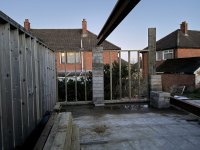
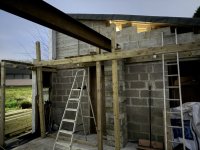
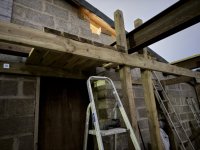
The whole process was slow, but managed to get the job done. Then came the moment of truth, was it level. As you can see, if it was any more right, it'd be wrong. One down, one to go. Dismantle the blocks and start over again, only this time it's a whole metre higher. There wasn't enough blocks now, so ended up building a platform that allowed the beam to sit on it and freed up the blocks under it. Again using the car jack, one side at a time.
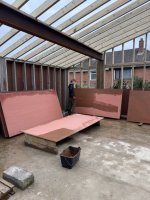
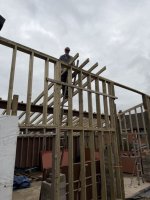
Now both beams are bolted into place, it's time to get the first set of 20 rafters up. These all need cut in to fit around the back wall and beams. Job for the weekend I think, weather forecast, snow
With the concrete base down over the summer the rest of the framing and roof structure needs to be added. Due to the span of nearly 9 metres we need 2 metal beams to be installed. Got a structural engineer, who literally lives round the corner, to visit the site and work out the beam sizes needed to support the roof. These were bigger than I had initially thought, but best to trust in the experts. Although I also asked ChatGPT for its recommendation and it suggested the same, so no issues there. These were ordered and delivered to the house. Now how does one shift 2, 9 metre chunks of metal weighting nearly 300kgs each.
We managed to use a plank to shift the beams onto some round wooden posts and start rolling these like in the Middle Ages. This worked out well, until we hit the hill section and the beam just wanted to roll back down again. Bring in the wench, sorry I mean winch. This was bolted to the concrete floor and the other end attached to the beam. We could use the plank to shift the beam up the hill and have the winch to take up the slack preventing the beam from rolling back.
This technique worked really well, and we managed to get both beams shifted up onto the concrete floor in short order.
Next issue was how to get the beams lifted up to their mounting places on the wall and timber supports. The timber supports has a 10mm metal plate added to help spread the weight of the beam on the wood. I had looked up our local hire shops for some inspiration, and found beam lifters. One was all that was needed. Hire out for the weekend and the jobs done, right.
NOPE!
The lifters were all out on hire and wouldn't be back until January at the earliest. I was hoping to get the beams up so I could get the roof rafters installed. So how to get these heavy lumps of steel lifted 3 and 4 metres into the air. Think, there must be another way.
Getting the shopping from Tescos and packing the car, I just happen to notice the scissor jack for lifting the car when changing the wheel. Hmmm, would this be able to lift the beam. Short story, even shorter, yes.
Working on one side I'd lift the beam up, slot a concrete block into place and lower the beam back done onto the block, then do the same on the other end, and back again, each time lifting the beam 6 inches at a time.
The whole process was slow, but managed to get the job done. Then came the moment of truth, was it level. As you can see, if it was any more right, it'd be wrong. One down, one to go. Dismantle the blocks and start over again, only this time it's a whole metre higher. There wasn't enough blocks now, so ended up building a platform that allowed the beam to sit on it and freed up the blocks under it. Again using the car jack, one side at a time.
Now both beams are bolted into place, it's time to get the first set of 20 rafters up. These all need cut in to fit around the back wall and beams. Job for the weekend I think, weather forecast, snow